


Corporate Case Study: How a 50-Person Sales Team Transformed After Three Days of Alignment

A business leader once brought 50 members of his sales team to attend a three-day team training programme.
Before the programme began, he admitted that he felt deeply uncertain.
Why was he so worried?
This was not a training programme that he was attending alone. He was bringing his entire 50-person sales team with him, and he carried many concerns and uncertainties:
“Are my thoughts truly aligned with theirs?”
“I believe the team needs to change, but do they feel the same way?”
“I want to lead everyone forward, but are they really ready?”
This is also one of the most common challenges faced by many Malaysian business leaders when managing a sales team.

The Greatest Risk for a Sales Team Is Not a Lack of Ability, but a Loss of Direction
The real challenge of managing a sales team is not simply whether each salesperson is capable.
It is whether the entire team can maintain the same direction, pace and belief.
Every salesperson has a different personality, level of experience and way of working.
Some are naturally driven and enjoy pushing forward, while others are more reserved.
Some are confident communicators, while others prefer to work independently.
Some focus heavily on individual results, while others place greater importance on teamwork.
When a team does not share a common language, even hardworking individuals may end up working in isolation because of differences in understanding and communication.
This is especially true in a sales team, where the emotional state of one member can easily affect others.
One highly motivated person can energise the entire team.
At the same time, one discouraged person can influence the people around them.
When a senior salesperson, a key team member or someone who usually drives the team’s energy leaves, the company loses more than just one employee.
The team’s familiar working rhythm may be disrupted.
Trust among team members may be affected.
The team’s morale and cohesion may also begin to weaken.
Sometimes, only one person leaves, but the impact is felt across the entire sales team.
The team may begin to lose its collective spirit.
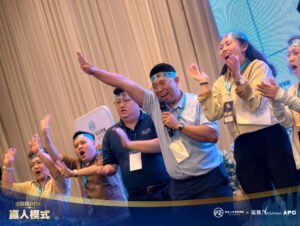

After Three Days, Team Members Began to Open Up
After completing the three-day programme, what made the business leader happiest was not only that the team had learned new methods.
He was even more encouraged to see many team members who had previously been shy and reserved begin to participate, share their thoughts and truly engage with the team.
When individuals are willing to open up, the distance between team members gradually becomes smaller.
Things they were previously afraid to say could finally be expressed.
Areas of misunderstanding could finally be discussed.
Problems that members once handled alone could now be brought to the team and addressed together.
Real team transformation does not always begin with learning a new technique.
It often begins when team members are willing to lower their defences and understand one another.
Training Must Be Practical and Applicable
The business leader also shared that Eric’s teaching approach was different from that of many other trainers.
Some training programmes may sound meaningful, but the content is too abstract. When participants return to work, they are unsure how to apply what they have learned.
This programme, however, felt practical, relatable and easy to understand.
The sales team could immediately apply what they had learned to daily communication, teamwork, customer interactions and the sales process.
This is especially important for sales teams.
Effective team training is not about making participants feel that the content was impressive while they are in the classroom.
It is about ensuring that every team member returns to the market knowing:
How to adjust their communication style;
How to work with colleagues of different personalities;
How to reduce misunderstandings within the team;
And how to communicate with different types of customers.
Training should not end when participants understand the content.
Its true value is shown when they can apply it in the workplace.
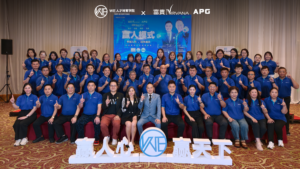

From Team Alignment to a Fivefold Increase in Sales
Before the programme began, the business leader was already reasonably confident that the team’s sales performance would improve.
After all, motivational training programmes usually provide a short-term boost in morale, helping salespeople become more positive, energetic and driven.
He expected the team’s performance to improve after the three-day programme.
However, the actual results went far beyond his expectations.
According to the business leader, the entire sales team appeared to have been reignited after the programme.
Team members did not simply become more positive. They began setting goals proactively, encouraging one another and pushing each other forward.
It was as though the entire team was being driven by the same force, moving together towards a much higher target.
In the end, the team did not experience an ordinary improvement in performance.
Its sales results increased fivefold, and the team rose directly to the number-one position in sales.
The outcome was deeply surprising to the business leader.
This was not merely a temporary increase in excitement, nor was it simply a case of several salespeople performing better individually.
The entire team’s communication, collaboration, sense of purpose and pace of execution had begun to change.
Previously, members may have focused on their own targets and individual performance.
After the programme, the team began motivating and supporting one another while moving together towards a shared goal.
Motivating one person may lead to an individual breakthrough.
But when an entire team is reignited at the same time, the collective energy can produce results far beyond expectations.
What made the result remarkable was not only that sales increased fivefold.
It was that the team began to realise that they were no longer working as separate individuals.
They had become a sales team capable of pursuing greater goals together.
Learning Together Created the Team’s Own “Secret Code”
More importantly, when all 50 sales team members experienced the same learning process, they began to develop a common language.
Certain messages no longer required lengthy explanations because the team already understood them.
Certain reminders no longer needed to be repeated because everyone knew what they meant.
Conversations that might previously have caused misunderstandings now had a shared framework of understanding.
The lessons learned during the programme gradually became the sales team’s own “Secret Code”.
This common language helped the team reduce misunderstandings, communicate more quickly and understand one another more effectively.
This is the biggest difference between training an entire team and sending only a few individuals to attend a programme.
When only one person learns, the change may remain with that individual.
When an entire team learns together, the change has the potential to become a shared habit and part of the team’s culture.
Once a common language becomes embedded in the team culture, improved performance is less likely to be a short-lived result.
It has a greater chance of becoming a repeatable and sustainable way of working.
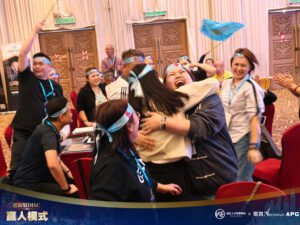

A Strong Team Spirit Should Not Depend on One Person
Every sales team will eventually experience changes in its people.
New members may join.
Existing members may be transferred.
Key team members may also choose to leave.
However, when the team’s common language, shared goals and culture remain strong, the entire team will not lose direction simply because one person leaves.
This is the true team spirit that a sales organisation needs to build.
Team spirit should not depend on one particularly influential person.
It should not exist only when sales performance is strong.
True team spirit means that regardless of the changes the team experiences, its members remain clear about their common direction, continue supporting one another and keep moving forward with the same shared language.
The value of team training is therefore not limited to attending a class together.
It is about helping people with different personalities, ideas and working styles develop a common language, shared belief and collective goal.
When team members are willing to open up, genuine communication can begin.
When communication becomes aligned, trust can be built.
When the entire team shares the same direction, its execution, cohesion and fighting spirit can truly improve.
What a company needs to build is not merely a few high-performing salespeople.
It needs a sales team that will not lose its direction or collective spirit when one person leaves—and that can continue generating strong, sustainable results.